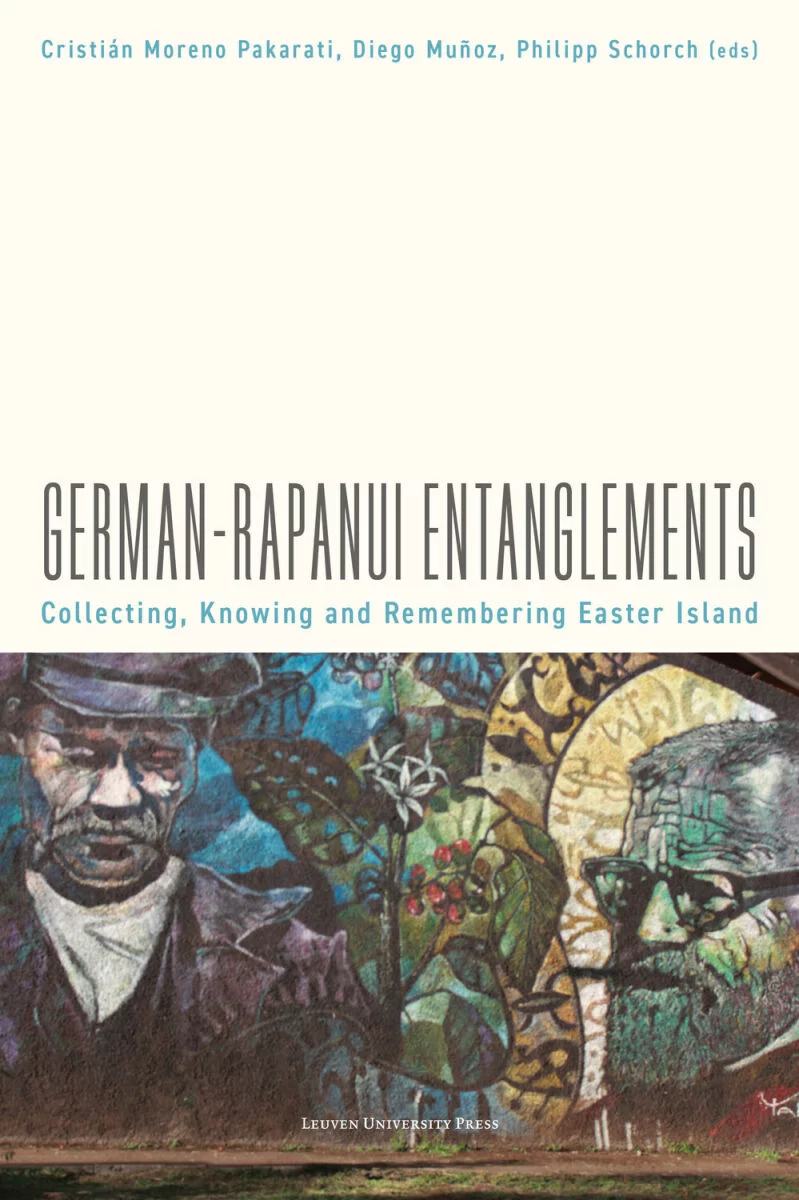
Parution de l’ouvrage « German–Rapanui Entanglements: Collecting, Knowing and Remembering Easter Island »
Cristián Moreno Pakarati, Diego Muñoz, Philipp Schorch
2026
Published by: Leuven University Press
German and German-speaking individuals and institutions to (re)shape different practices and discourses of ‘Rapanuiness’.
The chapters bring these dynamics to life: from Bavarian Capuchin activities that reached far beyond conversion, to collecting and exhibiting networks linking Altötting in Bavaria to Rapa Nui; from German efforts to record oral traditions and the 1957 German–Chilean expedition, to long-term archaeological collaborations at Ava Ranga Uka A Toroke Hau.
Written by scholars based in Rapa Nui, Germany, Chile, France, and the United States, the volume shows how Rapanui communities have shifted from being marginalised in the management of their heritage to becoming key agents in its interpretation and future. Together, these studies illuminate three centuries of entanglement—and their powerful resonance today.